
High blood pressure is a modifiable chronic condition affecting millions of people around the world and it is a key WHO global target to prevent a suite of non-communicable diseases (Nguyen and Chow 2021). Hypertension is responsible for about 50% of all deaths from stroke and heart disease, worldwide (National Organization of Public Health 2021). The systematic consumption of high sodium (Na) diets is a well-known risk factor for the development of hypertension (He and MacGregor 2009, Huang et al 2020,Filippini et al 2021), while high dietary intake of other salts (e.g. magnesium (Mg), calcium (Ca) and potassium (K)) can reduce BP (Houston and Harper 2008, Schutten et al 2018, Wabo et al 2022). Water is an underestimated source of salts which contributes to the total salt load of the body. Monsoon, brings an increase in humidity levels and moisture, leading to high water content and thus leading to high salt as well which can be a risk factor for hypertension. Thus, taking preventive measures is far better than treating the complications.
Madhavbaug’s aim is to focus on the root cause rather than only treating the symptoms. It not only focuses on regulating blood pressure levels but also focuses on controlling the root cause which causes imbalance in the blood pressure levels. Furthermore, this blog focuses on the specific monsoon-related preventive measures that need to be taken by the hypertensive patients to avoid further development of complications.
How Monsoon Affects Blood Pressure
Monsoon Season
↓
Drop in Temperature + Increased Humidity
↓
Changes in Blood Vessel Function
↓
Altered Blood Circulation
↓
Fluctuations in Blood Pressure
↓
Increased Risk of Hypertension Episodes
↓
Symptoms
• Headache
• Dizziness
• Fatigue
• Breathlessness
↓
Higher Risk in People Suffering from:
• Heart Disease
• Diabetes
• Elderly
• Kidney Disease
↓
Monitoring + Lifestyle Measures + Medical Consultation
Monsoon Care for BP Patients
Since hypertension is a lifestyle disorder, changes in lifestyle and daily habits are a must to control the increased blood pressure levels in monsoon. Following are some important tips to be considered:
Eat a larger amount of fruits having potassium, like bananas, guava, kiwi, pomegranates, and dried fruits like apricots and prunes.
Exercise regularly
Dry yourself on a regular basis and avoid getting wet during heavy rains.
Avoid excessive salt intake
Avoid excessive oil consumption
Avoid drinking too much of tea or coffee
Avoid consuming preservatives
Avoid sleeping in the day
Avoid excessive snacking
Avoid smoking and alcohol intake
Changing habits can be a bit tricky at the start. The following is a seven-day chart to help you keep a note of your habits and track your progress.
7 Days Heart Health Checklist
Monitoring Blood Pressure at Home
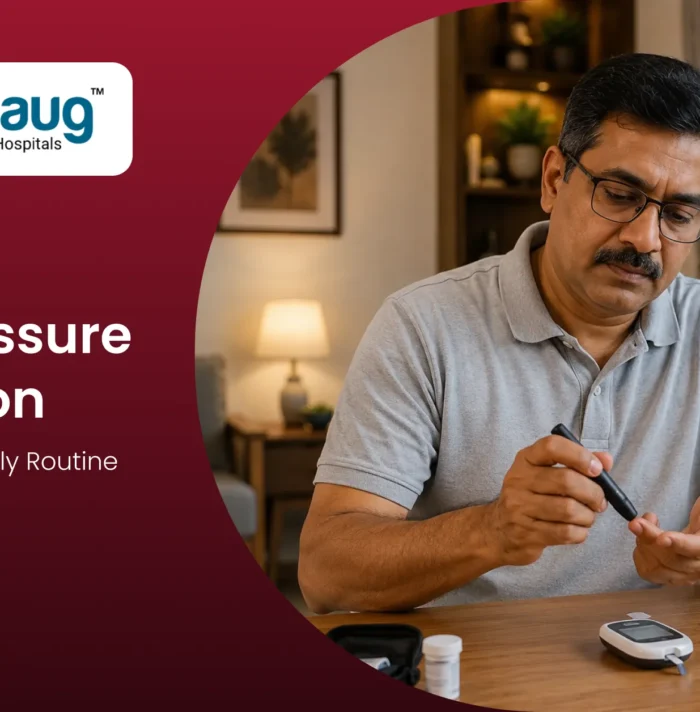
Blood pressure needs to be measured on a daily basis, so knowing how to monitor blood pressure at home is important. Changes in blood pressure levels can only be detected by continuously monitoring them, and measuring them every day is important. National Institute for Clinical Excellence (NICE) guidelines for Home Blood Pressure Monitoring recommend that when using Home Blood Pressure Monitoring to confirm a diagnosis of hypertension, it is necessary to ensure that:
For each BP recording, two consecutive measurements are taken, at least 1 minute apart with the person seated;
BP is recorded twice daily, ideally in the morning and evening; and
BP recording continues for at least 4 days, ideally for 7 days.
Measurements taken on the first day should be discarded, and the average value of the remaining days after day one should be used.
Ayurvedic Routine For High BP
Dinacharya (Daily Routine) involves adopting a disciplined daily routine to harmonise the body’s biological clock with natural cycles. Key practices beneficial for hypertension include the following:
Waking up early (Brahma Muhurta) enhances mental clarity and reduces stress. This is beneficial for hypertension since stress is one of the leading causes of hypertension.
Abhyanga (Oil Massage) with medicated oils like Bala Taila helps improve circulation, reduce stress, and balance Vata dosha. Studies have shown that regular massage therapy lowers cortisol levels and improves heart rate variability (Iyengar BKS, 2015)
Exercise (Vyayama) such as yoga or brisk walking, improves cardiovascular health and reduces blood pressure. Specific asanas like Shavasana, Bhujangasana, and Pranayama (e.g., Anulom-Vilom, Bhramari) are highly effective in stress management.
Dietary practices emphasise freshly prepared, Satvik (wholesome) food and avoiding processed foods, excess salt, and stimulants like caffeine as well as including potassium-rich foods like bananas and spinach.
Meditation and relaxation practices like mindfulness meditation and chanting of mantras (e.g., Omkara) reduce psychological stress, a major contributor to hypertension. Research has highlighted the role of meditation in lowering systolic and diastolic blood pressure (Srikumar S, et al, 2020)
Ritucharya (Seasonal Regimen) for monsoon includes the following:
Consume easily digestible foods to prevent Vata aggravation. So eating foods like moong dal, rice and ghee and avoiding fermented and raw foods.
Avoid raw and cold foods to support digestive fire (Agni).
Based on these principles, personalised care and a plan are given at Madhavbaug. To know more, visit your nearest centre.
Madhavbaug’s Approach to Hypertension
Madhavbaug’s Ayurvedic therapy for hypertension focuses on addressing the root causes that are
Removing excess salt and retention of water
Restoring elasticity in blood vessels
Calming the mind to prevent stress-induced BP spikes
Strengthening heart muscles and arteries
Detoxifying metabolic toxins (Ama) from the bloodstream
Correcting Vata-Pitta imbalance
Madhavbuag’s Hypertension Reversal Programme includes holistic care, which includes many components like Panchakarma, diet, continuous monitoring, exercise, herbal medicines and personalised care for every individual.
You may read more about the treatment in detail here.
Final Thoughts
Madhavbaug focuses on the main root causes related to chronic disorders and focuses on treating them holistically through not only medications but also regulating diet, exercise and preventive measures to help people live a healthy life. To start your journey towards holistic healing, book a consultation with Madhavbaug.
Frequently Asked Questions
Q.1 Does the rainy season increase BP?
A decrease in temperature and rise in humidity during monsoon cause narrowing of blood vessels, which can raise blood pressure and add extra load to the heart.
Q.2 What time to check BP every day?
Take your blood pressure twice daily: once in the morning (before eating or taking medication) and once in the evening.
Q.3 Can drinking lots of water lower blood pressure?
Yes. Staying hydrated supports healthy blood pressure by maintaining proper blood volume and helping your kidneys flush out excess sodium. However, drinking water will not actively “cure” or treat chronic high blood pressure.
Q.4 How much salt per day for BP patients?
If you have high blood pressure, the American Heart Association recommends limiting your sodium intake to no more than 1,500 mg per day.
Q.5 What is the 7-second trick to lower blood pressure?
The “7-second trick” is a controlled breathing exercise used to temporarily reduce stress and blood pressure. It works by calming the nervous system. To do it: inhale slowly through your nose for 4 seconds, and exhale gently through your mouth for 7 seconds. Repeat this cycle for 5–10 minutes.
References
Xeni, C., Oliva, R., Jahan, F., Romaina, I., Naser, A.M., Rahman, M., Fleming, L.E., O Gribble, M. and Makris, K.C., 2023. Epidemiological evidence on drinking water salinity and blood pressure: a scoping review. Environmental Research: Health, 1(3), p.035006.
Nguyen T N and Chow C K 2021 Global and national high blood pressure burden and control Lancet 398 932–3 Pomeranz A, Dolfin T, Korzets Z, Eliakim A and Wolach B 2002 Increased sodium concentrations in drinking water increase blood pressure in neonates J. Hypertension 20 203–7
He F J and MacGregor G A 2009 A comprehensive review on salt and health and current experience of worldwide salt reduction programmes J. Hum. Hypertension 23 363–84
Filippini T, Malavolti M, Whelton P K, Naska A, Orsini N and Vinceti M 2021 Blood pressure effects of sodium reduction: dose-response meta-analysis of experimental studies Circulation 143 1542–67
Wabo T M C, Wu X, Sun C, Boah M, Nkondjock V R N, Cheruiyot J K, Adjei D A and Shah I 2022 Association of dietary calcium, magnesium, sodium, and potassium intake and hypertension: a study on an 8-year dietary intake data from the National Health and Nutrition Examination Survey Nutr. Res. Pract. 16 74–93
NICE. Hypertension: Clinical management of primary hypertension in adults. Available at: https://www.nice.org.uk/guidance/cg127 (accessed 29 June 2015).
Yadav, K. and Kale, A.A., 2024. ROLE OF DINACHARYA AND RITUCHARYA IN THE MANAGEMENT OF HYPERTENSION.